


Hunan has been home to a variety of renowned tea since ancient times, such as Anhua dark tea, Guzhang Maojian, Baojing golden tea, Shimen Yinfeng, Yuanling Jietan tea, Taoyuan daye tea, and Jianghua kucha. Spring is the very season to savor tea. Let's embark on a tea journey through Hunan.
Anhua Dark Tea
Anhua County in Yiyang City is one of the origins of Chinese dark tea, with its tea culture first documented in the Tang Dynasty (618–907), flourishing in the Song Dynasty (960–1279). The dark tea was designated as imperial tribute in the Ming Dynasty (1368–1644) and reached its peak in the Qing Dynasty (1636–1912). The representative products include "Three Jian Tea" – Tianjian, Gongjian, and Shengjian, "Three Brick Tea" – Heizhuan, Huazhuan, and Fuzhuan, and "One Flower Roll Tea" – Qianliang tea series. Among these, the craftsmanship of Qianliang tea and Fuzhuan tea was inscribed on the UNESCO Representative List of the Intangible Cultural Heritage of Humanity in 2022.
Recommended tea plantations: Yuntai Mountain Scenic Area (with over a 667-hectare tea farm where visitors can experience picking tea leaves and camping for star observation); and, Baishaxi Tea Plant
Best harvest periods: Spring tea leaves should be picked around the Qingming Festival, which falls on April 5 this year, and autumn tea leaves should be harvested during Liqiu solar term, (the start of autumn), which falls on August 7 this year.
Hands-on activities: Picking tea leaves, traditional tea-making, visiting the Dark Tea Museum, and horseback riding along the ancient Tea Horse Road.
Nearby attractions: Ancient Tea Horse Road Scenic Area, China Dark Tea Museum, and Zhexi Reservoir.
Local delicacies: Chicken stewed with dark tea, Anhua cured meat, Lei Cha (ground tea), and You Baba (fried rice cakes).
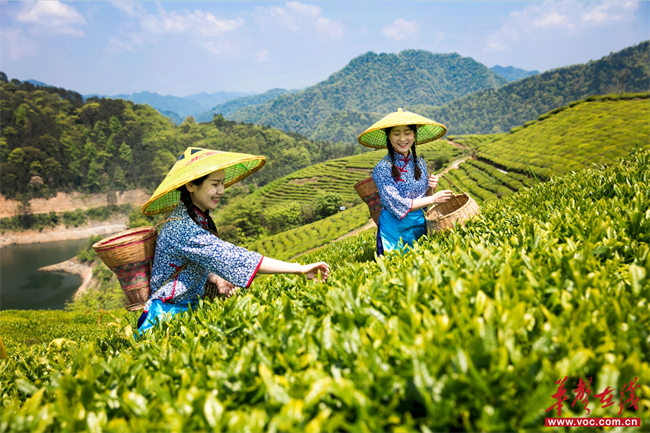
(Photo/Zeng Lixia)
Guzhang Maojian Tea
The history of Guzhang Maojian tea can be traced back to two thousand years ago. As early as the Eastern Han Dynasty (25–220), Guzhang was documented as a significant tea-producing region in China. In the Tang Dynasty (618–907), it was designated as an imperial tribute. Its production involves eight intricate steps: spreading and withering, fixation (pan-frying), initial rolling, second fixation, secondary rolling, third fixation, shaping, and preserving the down and finishing in the pan. The finished tea leaves are tight, straight, and downy-covered, featuring an emerald color. The tea soup tastes mellow and fresh, with a sweet aftertaste.
In the tea gardens of Guzhang County, visitors may try their hand at the "three fixation and rolling" tea-making process under the hands-on guidance of inheritors of this intangible cultural heritage.
Recommended tea plantations: "Baiye No.1" Ecological Tea Garden in Wengcao Village, Morong Town; and, Yingmeizi Tea Garden in Shutouxi Village, Guyang Town.
Best harvest period: Late March - Mid-April.
Hands-on activities: Picking tea leaves, and experiencing traditional tea fixation skills under the guidance of intangible cultural heritage inheritors.
Nearby attractions: Guzhang Red Rock Forest National Geopark, Zuolong Gorge, and Morong Miao Village.
Local delicacies: Miao cured meat, Shefan (a traditional streamed food of Miao and Tujia people in western Hunan every spring, made of sweet wormwood, green onion, glutinous rice, preserved meat, and vegetables), and mugwort cake.
Baojin Golden Tea
During the Jiajing reign (1522–1566) of the Ming Dynasty, Lu Jie, an imperial censor, fell victim to miasma while traversing dense forests on an inspection tour in Baojing. Fortunately, an elderly Miao woman brewed a concoction using old tea leaves, which swiftly cured him. In gratitude, Lu rewarded her with an ingot of gold and recommended the tea to the emperor as tribute. Thus, "Golden Tea" earned its name.
Visiting Huangjin Village in spring, you may take part in an ancient ritual worshipping the Tea Ancestor, experience the bustling fair at the foot of Lvdong Mountain, and discover this legendary tea that is worth its weight in gold.
Recommended tea plantations: Ancient tea garden in Huangjin Village, Lvdongshan Town; and, Xianying Tea Industry Sightseeing Park in Dayan Village, Hulu Town.
Best harvest period: Early March - Mid-April.
Hands-on activities: Tea ancestor worship ceremony; village fair; picking tea leaves; and, traditional tea-making.
Nearby attractions: Lvdong Mountain Scenic Area; Hangji Miao Village; and, Lvdong Miao Village.
Local delicacies: Miao cured meat, wild brake, tea-flavor beer, and tea-flavor liquor.
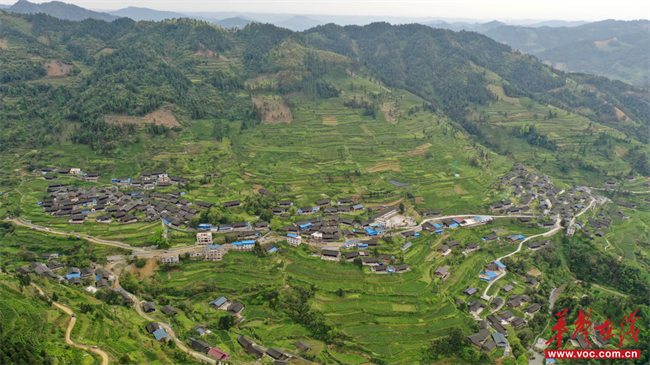
(Photo/Guo Liliang)
Shimen Yinfeng Tea
Shimen Yinfeng tea is mainly produced in the Huping Mountain National Natural Reserve and its surrounding areas. This region is widely recognized as one of the two "green triangle" regions for high-quality tea around the globe. In 2025, Shimen Yinfeng green tea was acclaimed by judges for its "straight shape, vibrant green color, and fresh flavor," earning the title of "Five-star Recommended Product" at the "Huaming Cup" national tea product evaluation campaign.
Springtime is perfect for hiking and picking tea leaves. You may climb up Hunan's "rooftop"— Huping Mountain, picking tender tea buds amidst a mist-shrouded tea garden, and visit Jiashan Temple on your way down, exploring "Zen in Tea" in Buddhism.
Recommended tea plantations: Tea gardens around the Huping Mountain
Best harvest period: Around Qingming Festival, which falls on April 5 this year.
Hands-on activities: Picking tea leaves; experiencing tea-making; and, hiking.
Nearby attractions: Huping Mountain and Jiashan Temple.
Local delicacies: Shimen chitterlings and Tujia cured meat.
This article is from Hunan Provincial Government. www.enghunan.gov.cn.
Translator: Pang Yuehui
Chinese source: hunantoday


