

Home>Tourism>Tour Hunan>Yongzhou>Tourist Attractions
Wuxi Cliff Inscriptions Digital Museum
Recently, the VR Light and Shadow Stele Viewing Project of the Wuxi Cliff Inscriptions Digital Museum in Qiyang, Hunan Province, won the title of Outstanding Project in Hunan Cultural Tourism "New Flower YOUNG" for its innovative integration model of "Culture + Technology + Youth."
The award-winning VR Light and Shadow Stele Viewing Project uses digital technology to recreate the spectacular sight of thousand-year-old cliff inscriptions. Through various forms such as multimedia, VR, and light-shadow interaction, it has achieved the first full-dimensional digital restoration of stone inscription cultural relics.
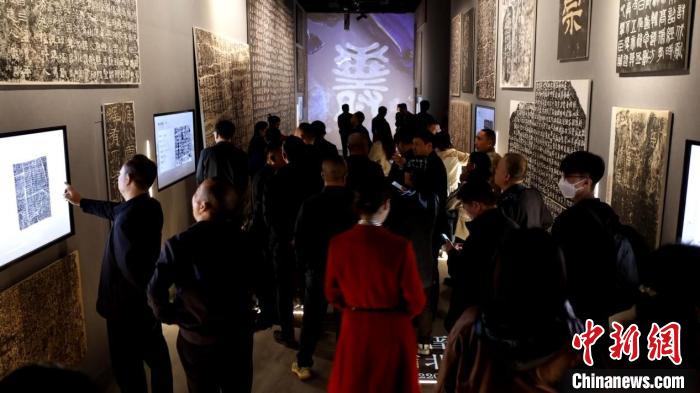
Visitors tour the Wuxi Cliff Inscriptions Digital Museum in Qiyang. (Photo provided by the Publicity Department of the CPC Committee of Qiyang county-level City)
The Wuxi Cliff Inscriptions in Qiyang, a national key protected cultural relic unit, features 505 surviving cliff inscriptions from the Tang dynasty through the Qing dynasty. The most precious among them is the "Da Tang Zhong Xing Song" (literally "Ode to the Restoration of the Great Tang Dynasty"), composed by poet Yuan Jie and transcribed by master calligrapher Yan Zhenqing.
In collaboration with the Malanshan Panoramic Cultural Digital Innovation Center, Qiyang City is comprehensively advancing the digital preservation and utilization of the Wuxi Stele Forest. Through digital acquisition and restoration, the project is bringing back to life traces and information on the stone steles and carvings that are no longer visible to the naked eye. Furthermore, by employing panoramic audio-visual imagery, the project has created digital models of 505 inscriptions in the stele forest, making it possible to revive some cliff inscriptions that are on the verge of disappearing.
After wearing VR devices, visitors can immerse themselves in the three exhibition areas. They can engage in cross-temporal dialogues with the digital avatars of Yuan Jie and Yan Zhenqing from over 1,300 years ago, decoding historical stories and cultural codes within the inscriptions through light-shadow interaction.
Visitors can also easily access the China Cliff Inscriptions Database via an interactive touchscreen console, getting a glimpse of the distribution of cliff inscriptions extending from Wuxi to all parts of the country, and appreciating the unique charm of China's cliff carving culture up close.
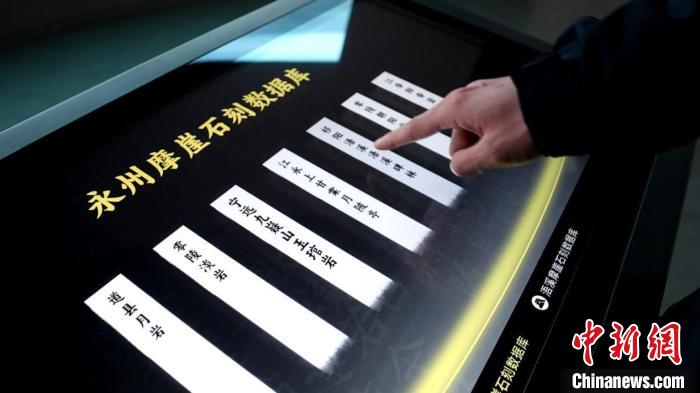
Digital technology recreates the spectacular sight of thousand-year-old inscriptions in Qiyang. (Photo provided by the Publicity Department of the CPC Committee of Qiyang county-level City)
"The entire digital space utilizes ten of the large immersive digital screens to dynamically interpret the eulogies of three eras, making the stationary artifacts speak and providing a new way for the public to touch history," introduced the project leader of the Wuxi Cliff Inscriptions Digital Museum.
Through VR technology, the project creates a "Digital Stele Forest + On-site Tourism" model. After an immersive online tour, visitors can go for a field exploration, forming an online-to-offline linked consumption chain. This builds a highly interactive, engaging cultural tourism complex favored by young people. The "Exhibition of Cliff Inscription Rubbings," AR photos with famous calligraphers, calligraphy exhibitions, and 3D-printed mementos have attracted many young visitors to check in, driving up sales of related cultural and creative products.
The project leader stated that the Cliff Inscriptions Digital Museum will dynamically optimize scene interaction design and develop new engagements like digital cultural creations, allowing the thousand-year-old cliff inscriptions to shine with new splendor.
Chinese source: Chinanews

 Hunan PSB Cyber Security Filing: No. 43010302000524