

Home>Tourism>Tour Hunan>Zhuzhou>Tourist Attractions
Shennong Valley National Forest Park

Photo source: zhuzhou.gov.cn
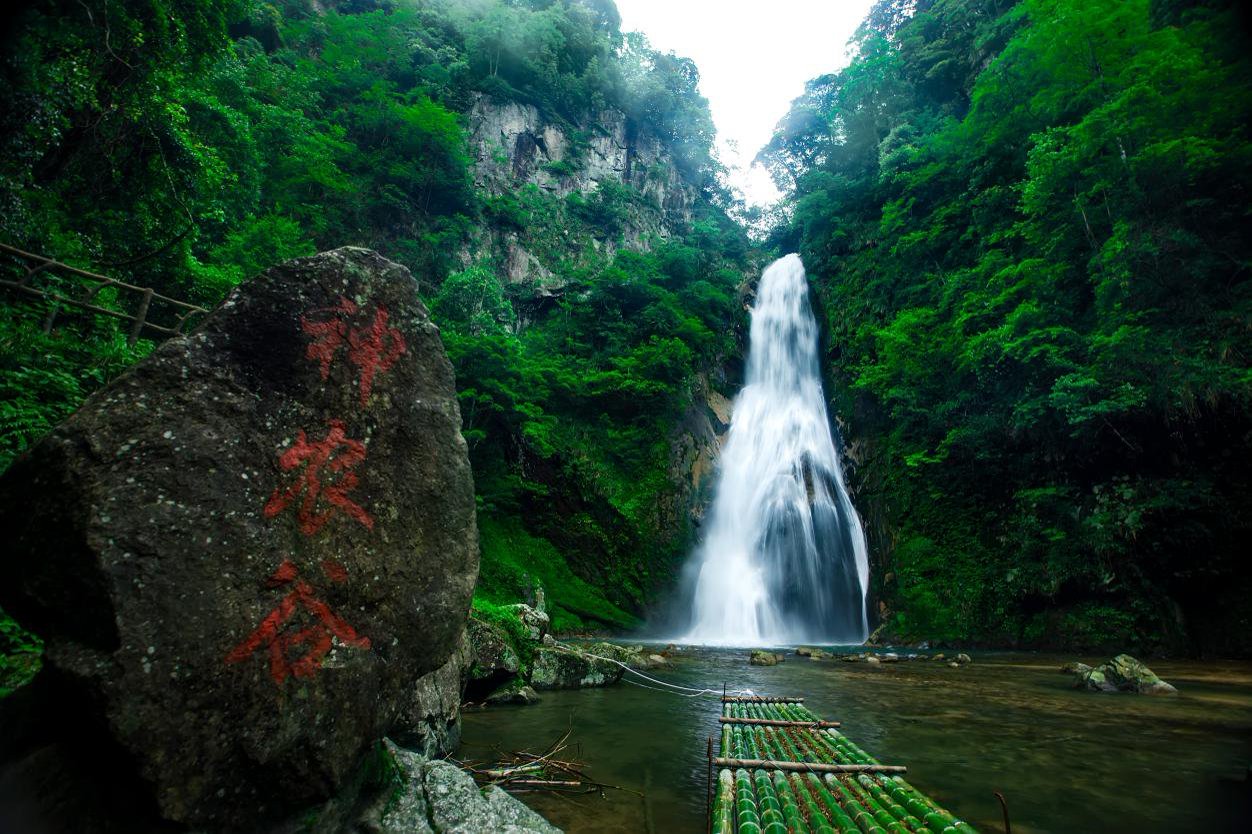
(Photo provided by Zhuzhou Municipal Bureau of Culture, Tourism, Radio, Television, and Sports)
Shennong Valley was originally named Taoyuan Cave. It was named Taoyuan Cave because the valley resembled a cave and, during the blooming season, wild cherry blossoms and peach flowers covered the mountains far and wide. In August 2005, it was renamed Shennong Valley due to its proximity to Emperor Yan's Mausoleum.
Within Shennong Valley, there are six major scenic areas—Jiashui, Taohua Stream, Hengni Mountain, Jiuqu Water, Pingkeng, and Tianxinli—with over 40 main attractions. Of these, Zhulian Waterfall, known as "Asia's No. 1 Oxygen Bar," boasts an air negative oxygen ion concentration as high as 136,426 per cubic centimeter. The valley is home to the best-preserved primitive forest in southern China, spanning 116,000 mu (approximately 7,733 hectares); and the Shennong Waterfall, the tallest waterfall in Hunan Province, dropping 235.2 meters. The place receives nearly one million domestic and international tourist arrivals annually and has gradually become a nationally renowned tourist destination.
Chinese source: zhuzhou.gov.cn

 Hunan PSB Cyber Security Filing: No. 43010302000524